
7 fitness challenges with friends: ideas, rules and a weekly plan
Choose a challenge that fits your group, score participation rather than intensity, and make the next session easy to join.
A simple fitness challenge with friends is a weekly check-in: each person chooses a realistic activity goal, shares when they finish, and joins one shared session if schedules allow. Count participation, not calories, pace or body changes.
Here are seven group fitness challenge ideas, with rules you can adapt for beginners and different schedules. These are suggested formats, not tested guarantees of better fitness.
Choose your challenge
| Challenge | Best fit | Suggested starting rule |
|---|---|---|
| Check-in streak | Mixed fitness levels | Choose your own weekly activity target |
| Step ladder | Friends in different places | Set a shared total from your usual activity |
| Class crawl | Friends who enjoy studios | Take turns picking a class everyone agrees to |
| Relay month | Different schedules | Pass a check-in to the next person |
| Bingo card | Friends who like variety | Choose accessible activities and count a line |
| Celebration jar | A group that wants a shared reward | Optional contributions, never penalties |
| Couch-to-5k pact | Beginner runners | Follow an appropriate plan at your own pace |
For comparing coordination and tracking tools, see apps to work out with friends.
Rule one: score attendance, not performance
For mixed-ability groups, count sessions or personal-goal completion instead of comparing miles, weights or calories. A walk, a home workout and a studio class can each count as one check-in. Agree on what counts before starting and protect rest days. Participation is a planning measure, not a measure of health or training progress.
The seven challenges
1. The check-in streak
Everyone chooses a realistic weekly target and shares a check-in after each session. A short message counts; photos and screenshots are optional. Miss a week and restart without elimination.
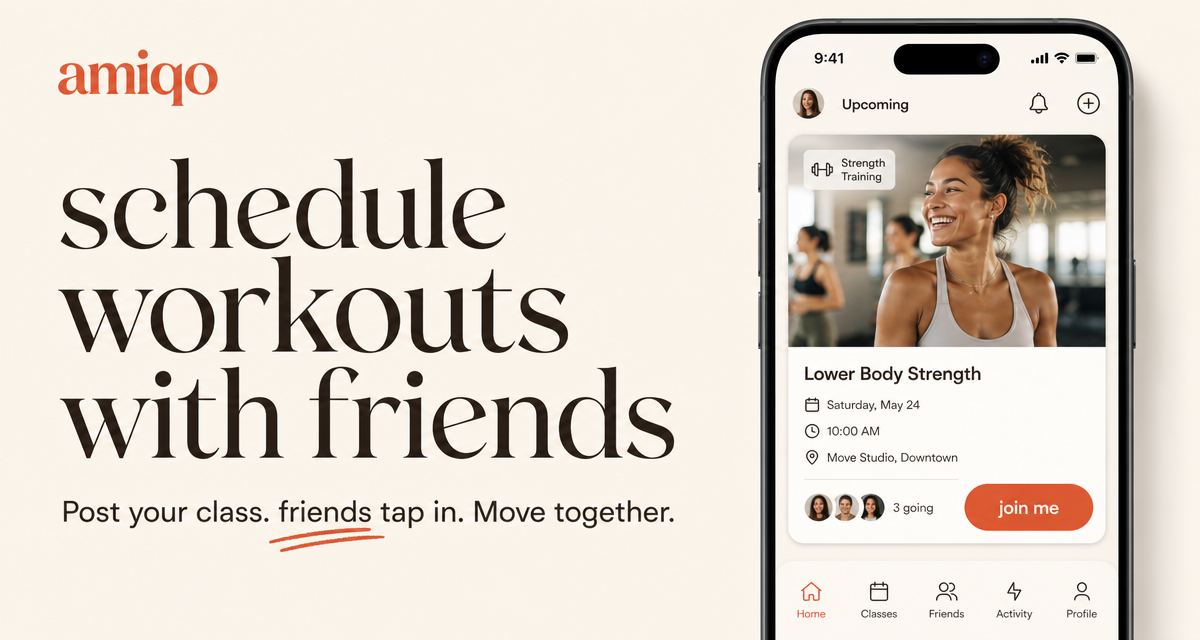
This is a simple option for mixed fitness levels because activities count equally. Use amiqo to post a shared workout with a day, time and place, then let friends tap in. You create the plan yourself; the app does not provide preloaded classes or track challenge scores.
2. The step ladder
Record a normal week first, then agree on a shared target that fits the group. Add totals manually in a shared sheet using each person's preferred tracker. Keep individual counts optional and adjust rather than automatically increasing the target every week. amiqo does not count or sync steps.
3. The class crawl
Take turns suggesting a class, then agree on cost, accessibility and difficulty before booking. Each person books with the studio or booking service. Post the agreed session in amiqo so friends can confirm, then share private class ratings afterwards. A suggested class is not a guaranteed booking or attendance.
4. The relay month
Try a month of passing check-ins: person A shares an activity on Monday, person B on Tuesday, and so on. Share in your chat and pass to the next person. Let anyone swap days or pause for rest, illness or travel. A missed turn should not erase everyone else's effort.
5. The bingo card
Build a shared card of twenty-five accessible activities: a walk, a stretch break, a familiar gym session or a workout with a friend. Let people substitute an activity and celebrate a completed line together. For class-based ideas, see workout classes with friends.
6. The celebration jar
If everyone wants to, contribute an affordable amount toward a shared coffee or meal at the finish. Participation and contributions are optional. Do not charge for missed workouts or pressure anyone to train through illness or injury. This is a shared reward idea, not an in-app payment feature.
7. The couch-to-5k pact
Choose a beginner plan suited to each person and share an easy session when your schedules align. The NHS Couch to 5K plan starts with alternating walking and running, with rest days between runs. Move at your own pace and repeat a week when needed. For coordinating different training plans, see training for a race with a friend.
Rule two: keep the group small
Start with two friends or a small group that can agree on the rules. Three to six people is a practical suggestion, not a proven threshold. Larger groups can split into smaller check-in circles if that makes planning easier.
Rule three: give quitting a return path
Build a return path from day one: missing a session does not eliminate anyone. Adjust goals together and welcome people back without asking them to make up missed workouts. Rest and recovery belong in the plan.
Start one this week
Choose a format, agree on a manageable target, and give the experiment an end date. Here is a plan you can copy into your group chat:
Four-week check-in challenge, starting Monday. Pick your own realistic weekly goal. Any activity you choose counts, photos are optional, and missed weeks are a fresh start. Shared walk: Thursday, 6pm, at our usual meeting spot. We will review the plan each Sunday. Want to join?
Use amiqo for the shared session: post the day, time and place, and friends tap in. It is free on iOS and Android. Friends need the app to confirm. Keep the challenge totals in your chat or sheet; amiqo is not a leaderboard, step tracker or class-booking service.
Questions about fitness challenges with friends
What is a good fitness challenge to do with friends?
A check-in challenge is a simple starting point: agree on a realistic weekly target, count any activity each person chooses, and share a check-in. It lets friends with different fitness levels participate without comparing pace or weight.
How long should a friend fitness challenge last?
Try four weeks as a manageable experiment, not a guaranteed habit-building deadline. Review the plan weekly and decide together whether to continue.
How do you keep a workout challenge going with friends?
Agree on realistic goals, count participation rather than performance, and let people return after a missed week. Rest, illness and changing schedules should not create penalties or pressure to train.
What app should we use for a fitness challenge with friends?
Use amiqo to post shared workouts and let existing friends tap in. Friends need the free iOS or Android app to confirm. Keep scores, step totals and bingo cards in a chat or shared sheet; amiqo is not a challenge leaderboard or automatic step tracker.
Do fitness challenges with friends actually work?
They can provide a shared goal and social support, but they do not guarantee consistency or fitness changes. Choose activities appropriate to each person and adapt the plan when needed.
For the follow-up reads: how to get a friend to work out with you, how to schedule workouts with friends, and how to stay consistent when motivation runs out.
Try this with your group this week
Give your challenge its first shared workout.
Post the day, time and place in amiqo. Friends need the free app to tap in. Keep challenge scores in your chat or shared sheet.